

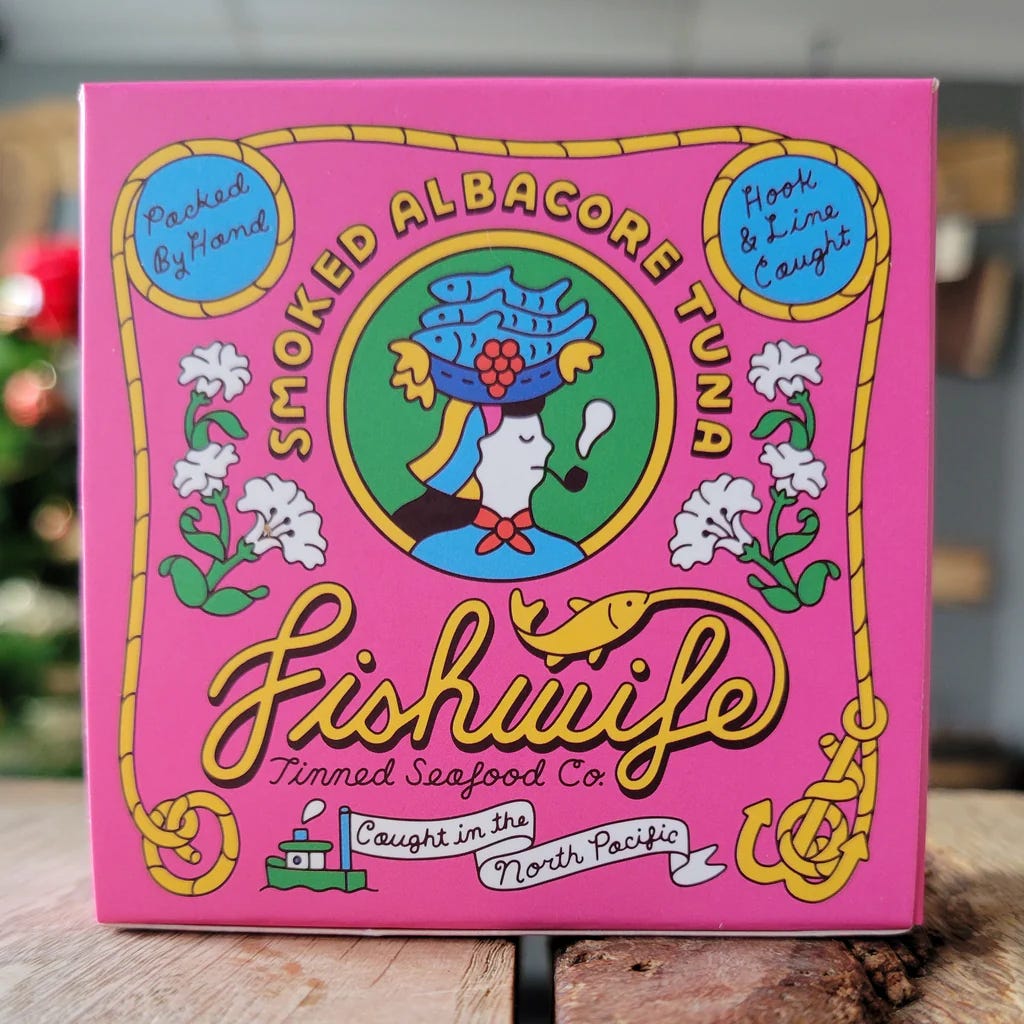
While StarKist and Bumble Bee were busy selling the same tuna your great-grandma ate in 1930, two roommates in LA noticed something: Americans were buying European tinned fish brands.
Classic arbitrage opportunity hiding in plain sight.
Becca Millstein saw what everyone else missed. The entire canned fish category was “dusty” - her word for stale, brandless, zero innovation. Just monoliths with no brand loyalty fighting over pennies.
So she did what any music marketer would do. She created the Beta Box.
Before sourcing a single fish, Fishwife built branded boxes and filled them with competitor samples. Hired an illustrator. Created the identity. Tested desire before product.
They sold out immediately.
The genius wasn’t the fish. It was the positioning.
While Bumble Bee competed on price, Fishwife competed on identity. Colorful tins. $32 for a 3-pack of tuna. Supply chain stories about 100-year-old Spanish canneries.
They weren’t selling protein. They were selling permission to care about your canned fish.
Then the pandemic hit. And “girl dinner” became a thing. Suddenly, aesthetic ready-to-eat meals weren’t just convenient... they were content.
The challenges came fast:
- Cofounder Caroline Goldfarb left (and sued)
- Scaling from DTC to 1,800 retail locations
- Convincing people to pay 10x for tuna
But here’s what kills me:
Fishwife now has 350,000 community members. They sell “hundreds of thousands of dollars” in lifestyle merch. For a seafood company.
When you build a brand people identify with, they’ll literally wear your sardine t-shirts.
The math reveals the opportunity:
- $2.6B category with little brand loyalty
- European positioning arbitrage
- Pandemic timing for ready-to-eat
- Community > commodity
Millstein calls out the next dusty categories: oatmeal, cereal, canned beans.
The playbook is simple: Find categories where nobody cares about brand. Add story, design, values. Capture premium pricing.
Sometimes the best innovation isn’t creating something new.
It’s making people care about something they never thought about.
Your biggest opportunity might be hiding in the most boring aisle.