

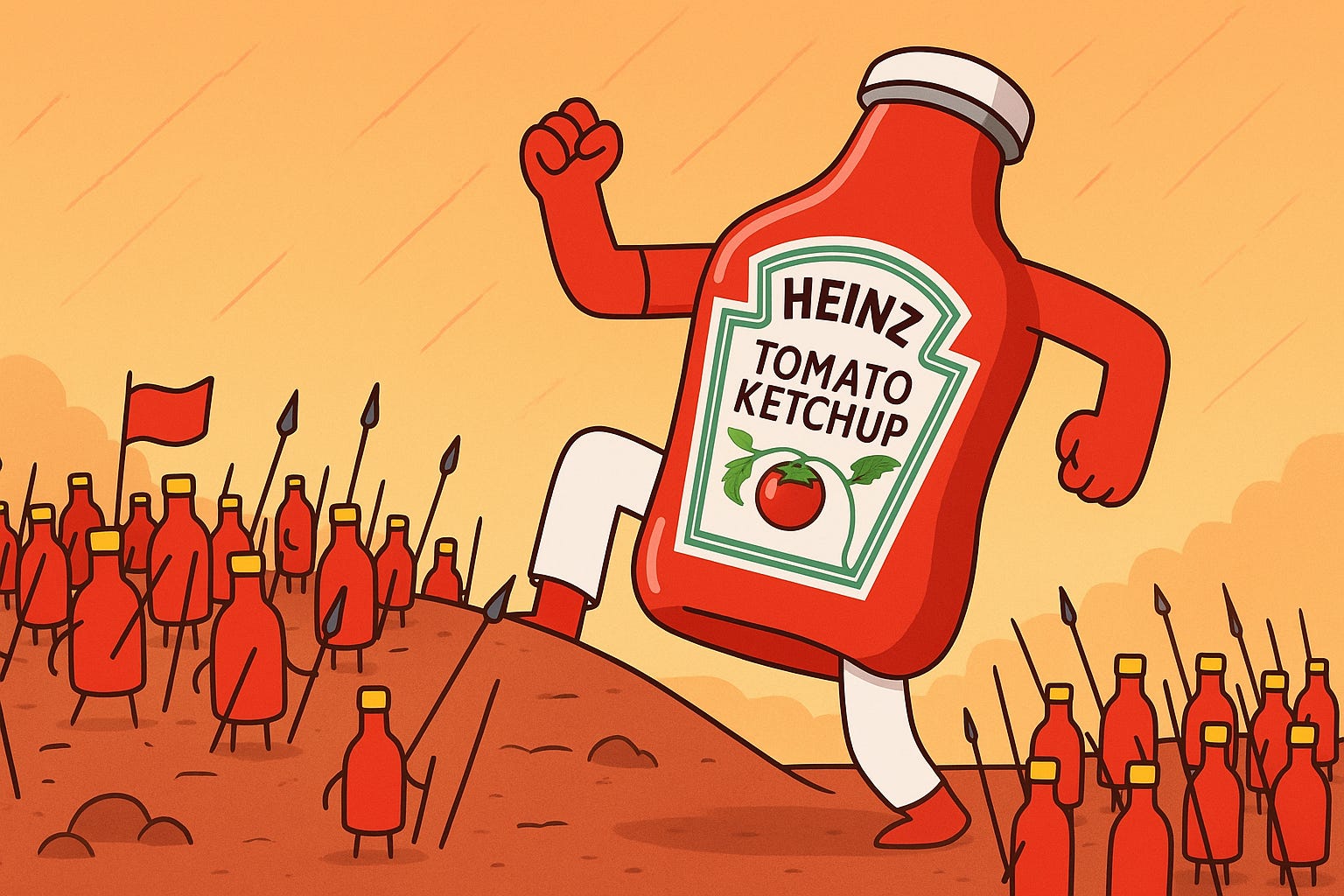
Malcolm Gladwell wrote it’s impossible to beat Heinz ketchup. Two college kids who couldn’t cook took it as a dare.
In 2004, Gladwell published his famous New Yorker piece explaining why Heinz owns 60% of the ketchup market. The perfect balance of sweet, sour, bitter, salty, and umami. Impossible to improve.
Brown University seniors Mark Ramadan and Scott Norton read it differently.
“We had never really cooked anything,” Norton admits. But they started making ketchup in their dorm anyway.
Their first batches were disasters. Too sweet. Too chunky. Nothing like Heinz. So they did what any rational person would do when facing a 150-year monopoly: They invented a British aristocrat.
Sir Kensington. A completely fictional Victorian merchant who supposedly served Catherine the Great ketchup at his manor. Meeting the Emperor of Japan over Kobe beef. Pure fiction.
But it sold $4 ketchup.
Glass jars instead of squeeze bottles. Scooping instead of squirting. Everything Heinz wasn’t. They weren’t competing on taste - they were competing on story.
Three years in, reality hit. Ketchup was bleeding money. But their mayo? Outselling ketchup 10-to-1.
Then came the Museum of French Fries.
No marketing budget? They preserved 100 french fries from NYC restaurants in resin. Opened a pop-up museum. Cost: $15,000. Media coverage: Everywhere.
By 2017, Unilever came calling. The company that makes Hellmann’s wanted the tiny brand stealing their premium customers.
Price tag: $140 million.
The kicker? After the acquisition, Unilever quietly killed Sir Kensington’s ketchup. The product that started it all. The impossible challenge to Heinz. Gone.
But the mayo empire lived on.
Gladwell was right. You can’t beat Heinz (Kraft Heinz) at ketchup.
But two kids who couldn’t cook proved something better: Sometimes the way to win an impossible game is to change which game you’re playing.
They spent 7 years trying to prove Gladwell wrong about ketchup. Turns out they were building a mayo empire the whole time.
What impossible challenge are you taking too literally?