

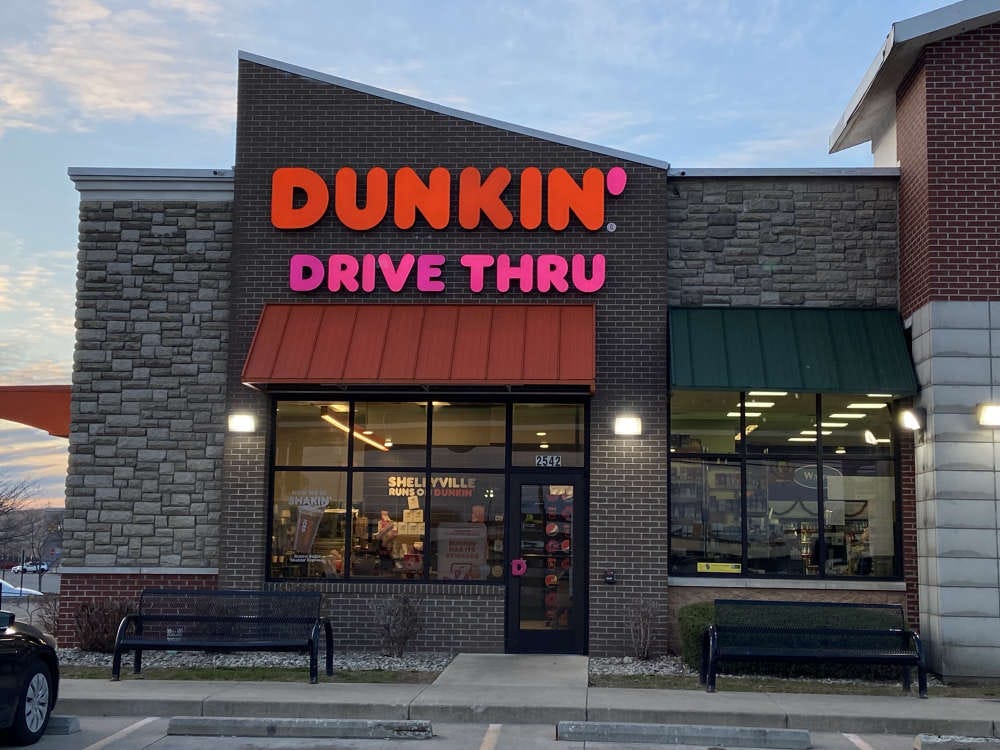
My friend buys Dunkin’ coffee to drink while waiting in the Starbucks line. 👀
That sentence tells you everything about how Dunkin’ built a $9 billion empire.
While Starbucks sells you an experience, Dunkin’ sells you time. One charges $7 for a handcrafted moment. The other charges $2 to keep you moving.
Dunkin’ didn’t stumble into this. They designed it.
“America Runs on Dunkin’” wasn’t just a tagline. It was a declaration of war against the coffee shop experience. No couches. No wifi passwords. No barista asking about your weekend.
Just making and getting your order. Fast.
I’ve been studying their evolution, and it’s a masterclass in knowing exactly who you are:
They went from donuts to breakfast sandwiches to energy drinks. But every addition follows the same rule: Can someone order it in 10 seconds and eat it with one hand while driving?
The regional loyalty is insane. In New England, Dunkin’ isn’t a preference. It’s an identity. People get married at Dunkin’. They name their dogs Dunkin’. They’d vote for Dunkin’ for president.
Why? Because Dunkin’ never pretended to be something it wasn’t.
While competitors added 40+ flavors and sizes, Dunkin’ kept it simple. Small, medium, large. No “venti” confusion. No decision fatigue at 6 am when your brain isn’t working yet.
They even turned their limitations into strengths:
Can’t compete on ambiance? Make it about speed.
Can’t match artisanal quality? Make it about consistency.
Can’t create Instagram moments? Make it about real moments... getting to work on time.
The math is beautiful:
- Average transaction: 90 seconds
- Average Starbucks transaction: 5 minutes
- Those extra 3.5 minutes? That’s 3-4 more cars through the drive-thru
My friend drinking Dunkin’ while waiting for Starbucks isn’t confused. They’re optimizing. Dunkin’ for the caffeine hit. Starbucks for the afternoon meeting.
Different jobs. Different brands. Both winning.
Sometimes the best strategy isn’t competing for the same occasion.
It’s owning a completely different one.