

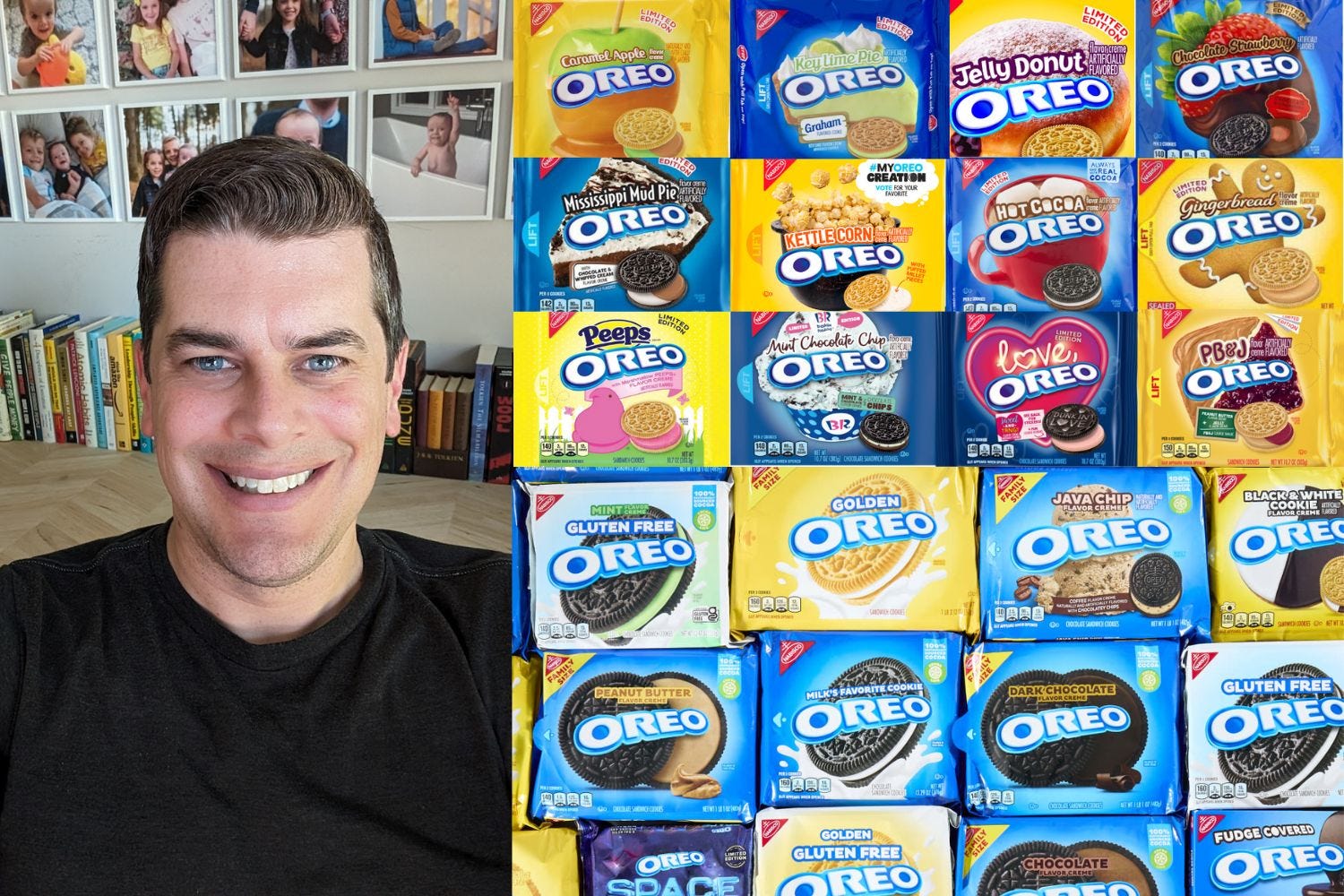
Oreo doesn’t make 47 different cookie flavors because they’re creative geniuses. They do it because they discovered something most brands miss: Limited editions create urgency in a category that has zero urgency.
Think about it. Nobody needs cookies today. You could walk past that Oreo display for months.
But slap “Limited Edition Birthday Cake” on the package? Suddenly, you’re grabbing two. That’s why Oreo has released 231+ different flavors of Oreos. Even when their original (OG) cookie is killer.
I’ve been studying their playbook, and it’s brilliant:
They launch a new flavor every 6-8 weeks. Not because people are demanding Wasabi Oreos (yes, that was real). But because “new” gets you to notice a product you’ve walked past 100 times.
Each limited flavor drives trial. Even the weird ones. Especially the weird ones. Because curiosity beats logic every time in the snack aisle.
Here’s the kicker:
The original Oreo still makes up 70% of sales. All those wild flavors? They’re just expensive billboards that drive you back to the classic.
Most food brands think innovation means replacing what works. Oreo knows innovation means giving people a reason to remember what they already love.
They’re not selling cookies.
Nabisco is selling little moments of surprise in your predictable grocery run.
The math is simple:
- Core product provides stability
- Limited editions create excitement
- Excitement drives foot traffic
- Traffic buys the original
- $3 billion flows in
Meanwhile, most brands are still arguing about whether to change their 20-year-old recipe.
What would happen if you stopped trying to fix what works and started creating reasons for people to rediscover it?